Lessons From the Passenger Seat
Stories and gripes and the occasional sermon from Dink. Texas history the way it happened and not the way they tell it. The things a man learns on the road and nowhere else.
Texas Outdoors · Fishing · Hunting · Camping · Back Roads
Salt water and deer camp and two-lane roads. I drive. The seat beside me is yours.
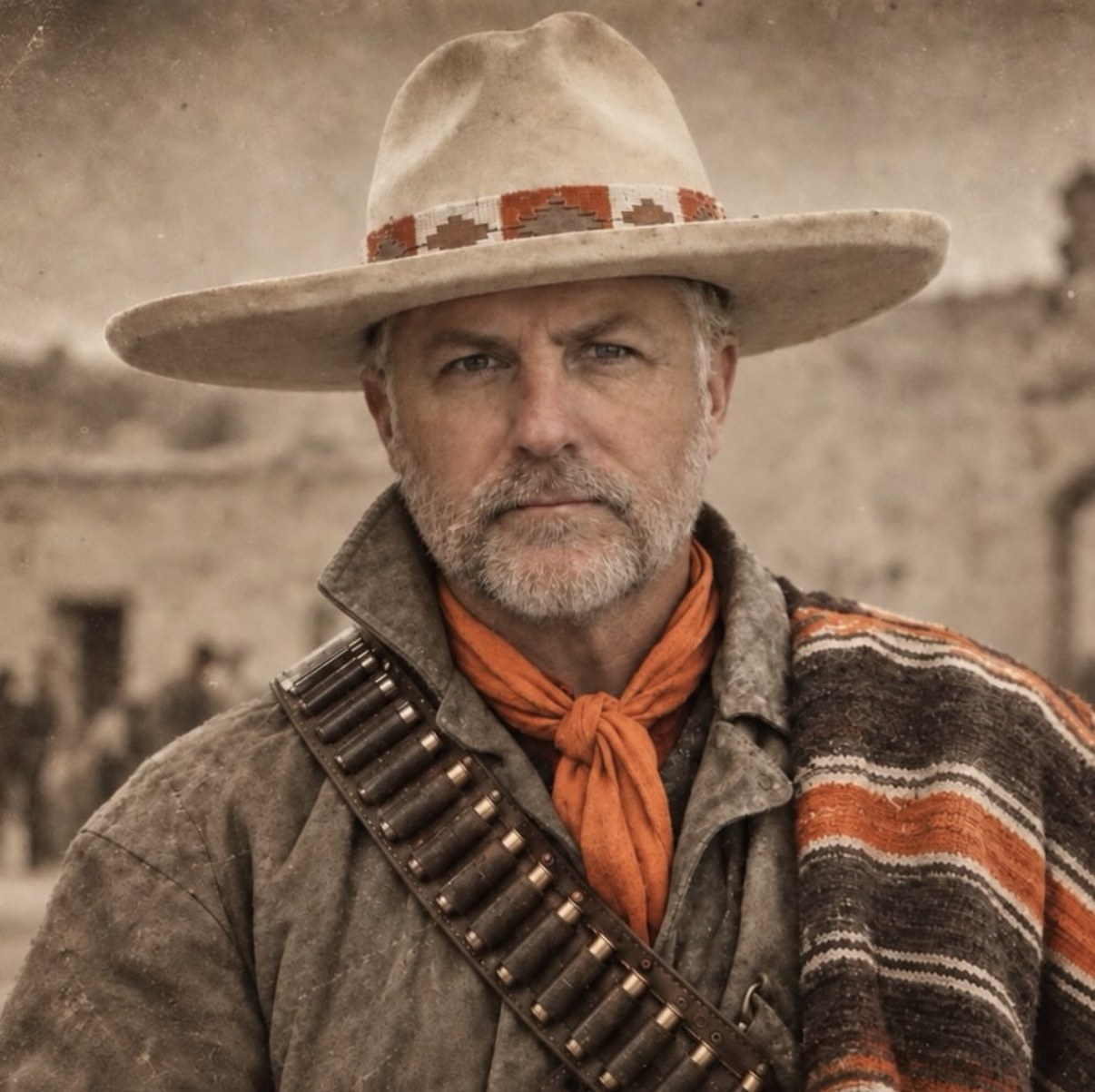
The name
This name isn't mine. I borrowed it from a man who earned it.
Dink Murphey worked for my granddad and then for my dad. Forty years and more in the auto parts business. When I was young and learning it I rode with him to his accounts and I watched him and I did not know yet that I was learning anything at all.
He retired and still he wanted to see his people. So I drove and Dink rode shotgun. One parts counter and then the next. Men he had called on for thirty years stood up when he came through the door.
He passed not long after. I know now what I did not know then. I learned more in that truck than in any room with a desk in it.
So this is me paying it back the only way I know. I drive now. The seat is yours.
What's down the road
Saltwater. Nothing else. Redfish and trout and tripletail on the flats where the water goes thin and clear. Bull reds and specks and pompano in the surf. And out past the rocks at the jetty, whatever is down there and hungry.
Cold in the blind before the light comes. Warm at the fire after it goes. The stories come later and they get better every year and nobody minds.
Thirty, forty miles down Padre Island National Seashore. The deer and the coyotes and the badgers and the sea turtles and the rattlesnakes were here first and they are here still. Look north. Look south. No one. Just the sand and the stars and the sound of the water.
Small towns and old courthouses and cafés where the coffee is hot and the history is right there if you slow down enough to see it. The philosophers and the old salts sit in the best places and I sit with them. Sometimes we fix the world. Sometimes we just drink the coffee.
Time with a tradesman is never wasted. Every one of them has a way of doing it that is his alone and if you watch long enough you see the genius in it. These are the hands that build America. Earnin' that money.
Regular stops
Stories and gripes and the occasional sermon from Dink. Texas history the way it happened and not the way they tell it. The things a man learns on the road and nowhere else.
The hunting is done and the fishing is done and the pot is on the tailgate. One pot. Simple food. Enough for whoever walks up.
One road. One small town. One good reason to take the long way home. You will be glad you did.
In print · Gun & Hook, Fort Worth
Both ran in Gun & Hook. One went wrong in the surf. One went right in a deer blind. Pick one.
First person / Bull sharks, a kayak and a bad decision
A rough surf, a bloody bluefish and a bleeding thumb. One evening's bull-shark run went sideways a long way from shore.
First person / A father, a son and a seven-point
A borrowed blind in twelve-degree cold. A buck that will never make the record books, except the one that counts.
Camp Supper
A long day on the water ends the way it always ends. A pot on the tailgate. A few people standing around it holding bowls and not saying much.
Most nights the pot is chili and most nights it starts with Jeb's Chili Dump. The 5th Wheel blend was made for people who cook where they sleep and sleep where they park. Real chili. No spice rack.
Audio series
Stories from the road told slow with the windows down. Big Bend and the Devils River and the beach at Sharkathon. The whole series is on Spotify.
Ride along
Súbete, amigo. Vámonos.
A rough surf, a bloody bluefish and a bleeding thumb. One evening’s bull-shark run went sideways a long way from shore — and there was a warning he should have heeded.
By Dink Murphey
Our shark-fishing adventure with the kids was set for Thursday. It was only Wednesday, but the water looked good, and there wasn’t a strand of June grass in sight to turn our line into a tangled mess. June grass had wrecked our shark outing the year before, so when Kevin suggested we go for it that evening, I agreed.
Our gear had been ready for days. A six-foot boat rod and a Penn Senator 6/0 reel spooled with 100-pound test. A homemade rig of weed-eater line — a Texas sharker’s money-saving favorite — ready to attach. At the business end: a steel leader, a 20/0 circle hook and a heavy spider weight to grab the sandy bottom. And we’d been blessed with a big bluefish from our outing the day before — ideal shark bait.
We would be practicing catch-and-release, so the rest of our gear waited in a bucket: rope to snare the tail and pull the shark into shallow water, bolt cutters for a quick snip of the hook from its mouth, gloves, a flashlight — and a camera to document whatever mayhem might ensue.
As agreed, we all met on the beach at 6 p.m. My kayak rested on the dry sand, waiting to be paddled out to the second sandbar for the bait drop. The glorious second sandbar — a major feeding ground for the bull sharks that frequent the Emerald Coast.
I began preparing the bait. Kevin suggested the surf might be a little too rough, that maybe we should wait until tomorrow as originally planned. By then my adrenaline was really pumping. I kept working on the bait and said, “Let’s just go for it.” If we lived near the coast it would have been different, but our time was limited to a seven-day summer vacation. Besides, the kids were fit to be tied with excitement. My adrenaline climbed. I was locked in on the decision, admitting only to myself the doubt that lingered beneath it.
Working a little too fast, I cut my thumb on the razor-sharp tip of the 20/0 circle hook. Not a small cut — a gaping one. The kind that could easily have used some of that purple superglue hospitals charge dearly for. Maybe even a few stitches. One of the kids ran back to the cottage for electrical tape, and I gave my thumb a quick, creative wrap, hoping it would hold through the paddle out.
Back to the bluefish. I ran the hook through the mouth and out the gill, then punched it into the gut and back out near the tail, and strapped on a couple of zip ties to keep the hook in position — a strategic placement for a quick jab into the jawbone of an unsuspecting bull. For added effect I finished the bluefish off with cuts, slashes and pokes, partly for show for the kids, but also to present a bloody bait. Sharks, after all, love blood.
My son Chas asked whether the blood was from the bait or from my thumb.
I wasn’t sure.
I zipped up my life jacket, leashed my paddle to the kayak and boarded for an immediate launch, just after a wave crashed down. Kevin took the rod, set the drag open and kept his thumb on the spool to prevent a backlash. Like every day before it on that trip, the surf was rough. I was confident I could make it through the breakers, but I worried about how much water the kayak would take on. A little water in the hull was normal for most of my rigs; too much was not good. The more I thought about it, the more I resigned myself to the fact that a “turtling” was a real possibility that day.
Paddling up and over some oncoming waves and straight through others, I found it a challenge to regain speed after each one. Struggling to catch my breath between them, it dawned on me: I had forgotten to attach the spider weight to the rig before launching. The heavy weight that was critical to holding the bait on the sandy bottom — keeping it from drifting down-current or, worse, back to shore.
Returning for the weight was not an option. I knew I couldn’t muster a second outbound battle. I would just have to make the drop and hope the bloody bait produced quick results.
I was nearly at the drop point. I only needed to clear one more wave and gain a little more distance to reach the flatter water over the sandbar, where I could detach the bait from the snap hook at the rear of the kayak. A fairly simple task — but not one you want to attempt with a wave coming in.
The next wave came. I wouldn’t clear it.
It happened so fast. I wasn’t quite straight enough on the bow, and I didn’t have enough speed. I probably did have plenty of water in the hull. None of it mattered now, because I was in the water — and my kayak was upside down.
Leave the kayak. Leave it with the hidden bait below it. Leave now.
— The Decision
As I struggled to right the kayak, commands shouted in my mind. Find the bait. Detach it from the snap hook as soon as possible. The sliced-and-diced, bloody bluefish was dangling somewhere in the water below the kayak. I don’t recall ever actually looking for it; my mind locked onto righting the kayak and climbing back in. Visions of sharks homing in on my bait were not very comforting, and they probably clouded my judgment a bit.
I’m not sure how much longer I tried, unsuccessfully, to right the kayak. But before I knew it, my mind was made up.
Leave the kayak. Leave the kayak with the hidden bait below it. Leave now.
So I did.
As I began a backstroke toward shore, I looked over my shoulder to get a feel for the swim ahead. It didn’t look good. The thought that it was prime feeding hour for sharks wasn’t helping. I was wearing a life jacket, but waves and currents can do strange things in those waters — especially that far out in the surf.
As I always do, I was carrying a SPOT GPS locator in my life vest. I wondered if it would be necessary. What were Kevin and the others thinking back on shore? Would they call for help? Would I become the laughingstock of friends and family for having the Coast Guard, or some other local authority, rescue me from the surf? The fear was real — one I don’t recall ever having felt before. I powered the SPOT on, but I decided not to hit the emergency button.
Not yet, anyway.
Backstroking on to what seemed like the halfway point, I remembered my injured thumb. My cut thumb, leaving a tasty blood trail in its wake. (Probably the result of watching too many episodes of Shark Week.) Nonetheless, my right arm shot into the air like an overly eager schoolboy wanting to answer a question, and I switched to a one-armed backstroke.
The arrival in shallow water was uneventful. I was still floating horizontal, still backstroking. Only when my heels scraped the sandy bottom did I realize I was in four feet of water. I did my best to raise my late-Elvis frame from the surf.
Before I could absorb the questions from the kids or the worried looks from my buddies on shore, I began to hear that little voice in my head. Not mine — my wife’s.
“Honey, I think it may be a little too rough out there. Maybe you shouldn’t go shark fishing this evening.”
She is usually right. Yes, on so many occasions, she has been right.
She was right again.
I only wish I had listened.
A father, a son, a borrowed blind in the twelve-degree Panhandle cold. And a seven-point buck that will never make the record books, except the one that counts.
By Dink Murphey
My son Bobby was fourteen, and he and I had been after his first buck for a few years. The road there had been a good one. His first doe. A javelina. A few other Hill Country critters along the way. But now it was time. Time for the old rite of passage that fathers and sons have walked in the whitetail woods for as long as there have been fathers and sons and whitetails.
Just after Christmas an invitation came out of nowhere from my friend James, and it changed everything. Bobby was ready. I knew it. All the years of practice on the range and in the field, all the hard work, the preparation and the management were about to pay off. He had paid his dues.
The years leading up to it were full of good memories. We made a lot of runs to our Hill Country lease on the line between Bandera and Uvalde counties. It may be later in life before my boys appreciate a day of driving T-posts in 104-degree heat. But I believe they both learned the worth of time and elbow grease. Loading protein. Mixing mineral licks. Hauling corn. Keeping the feeders running.
Throw in six hours of highway between our house and the lease, and the wanting builds with every mile.
For two seasons I had listened to Bobby talk about his hunting friends. Buddies from school who had shot not only their first buck but a couple more. Now and then he would show me the pictures they posted to Instagram or sent him by text.
They were nice deer. Very nice. Most were cull bucks on the places where they were taken. Management deer. Big eight-pointers and bigger nine-pointers with solid mass. Deer any grown man would be proud to show his hunting compadres. And those weren’t even the trophies that walked those properties.
Our lease is something to see. It is the most beautiful Texas Hill Country I have ever laid eyes on. The family that owns and runs the ranch settled the land in 1885, and they have been good stewards of what God gave them.
I have called other places God’s country in my life. But this may be the land the good Lord smiles on most. It is that magnificent.
It sits within a few rifle shots of the town of Utopia, and the hills hold good, solid eight- and ten-point Hill Country deer. Hogs and the occasional exotic come as a bonus.
The rules of the lease are reasonable and built for sound management, with the usual cull requirements on does and bucks alike. Shooter bucks four and a half years or older, and no younger than three and a half. Eight points or better. Antlers outside the ears.
Bobby kept reminding me how many seasons we had gone without a trophy. I always shot back that it wasn’t for lack of opportunity.
In the second rut I gave him the green light on a very nice four-and-a-half-year-old eight-pointer. Just before he squeezed, Bobby came up off the scope for a deep breath. He apologized and went back to the glass quickly. Not quickly enough. It was his first bout with buck fever. It would not be his last. The doe that buck was chasing ran off, and the buck went with her.
I have to own a second chance that went south. I like this lease, and I would rather not be asked to leave over a rookie mistake. So when a different eight-pointer stepped out, I hesitated to call him clear. By the time I decided he was all right, he had made himself invisible. Maybe he was chasing a doe. Maybe he caught a whiff of my coffee breath. Whatever the reason, he was gone. Over the hill, maybe. Or worse, over the old cedar and barbed-wire fence between our lease and the neighboring ranch. That fence divided hunters who were unequal in how they managed deer and equal in how bad they wanted a buck that season.
I did not know it then, but that same kind of inequality in deer management would open the door for Bobby’s first buck. As much as I would have liked it to happen on our Hill Country lease, we were elated when James called. He asked us to join him, his son and another family at his ranch near Shamrock, Texas. It took me about four seconds to say yes.
No one has ever accused me of packing light or packing smart, least of all for hunting and fishing trips. This trip was no exception.
On earlier hunts with my boys I had made a point of carrying a Sako Forester chambered in .243. I wanted them to take their first buck with the same rifle I used on mine in Bosque County years ago. A rifle carried by their father and their grandfather and their great-grandfather.
But something made me reach for a different rifle this time. A no-frills Remington Model 700 in .30-06, blued steel and a walnut stock. The first rifle I could ever call my own. A gift from my father on my sixteenth birthday.
I had never used it much. I did not care for the old fixed-power Weaver scope that rode on it. Months before, though, I had bought my first Burris and mounted it on that sentimental old gun. It gave the rifle new life and left its character alone. I liked the look. I liked what I saw through the new glass even more. And I took comfort knowing it had been sighted in recently and had not traveled since.
James was not only willing to put us in one of his blinds for a buck. His rules were liberal, to say the least.
If a Boone and Crockett buck walked out in front of that blind, we were to take him.
— The Invitation
His ranch is big. It straddles two counties, and it is big even by Texas standards. He has put a lot of time and money into quality deer management, and it has paid off, for him and for the neighbors too. Neighbors who had put little of their own into it.
James told us a neighboring farmer had been putting day hunters along the fence line they share, and those hunters were shooting at most anything that walked by. Then he finished his generous offer. If a Boone and Crockett buck walked out in front of that blind, we were to take him.
Now those were rules a man could get used to.
We bundled up against the twelve-degree Panhandle cold and walked out to the blind. It was not long before a nice little eight-pointer came into the open with two others behind him. Bobby and I agreed quickly on the biggest of the three, the one hanging farthest back. He stood about a hundred yards out, but he would not give us the angle we wanted for a clean shot. Then he got jumpy and trotted off slow.
I told Bobby to take one of the two smaller bucks still standing there. He politely declined. He said he would wait for the big one to come back.
Was this my son? Showing that kind of patience?
I liked what I was hearing. And his patience paid. Before long the buck circled back, and Bobby was ready.
I leaned in and whispered. “I won’t say another word. Take your time, and shoot when it feels right.”
A few minutes passed.
Then the shot.
The buck did not drop where he stood. He ran off with the others. But every telltale sign of a hit was there. I said we ought to sit tight fifteen minutes or so before we went looking. Bobby could hardly sit still. After about ten I gave in, and we left the blind and walked to where the shot had found him.
Bobby picked up the blood trail first. I moved ahead and found it farther on. We had never rehearsed this. Never studied it. But we fell into a rhythm and took turns leapfrogging each other, finding it and losing it and finding it again.
“Here it is,” I would say.
“Here it is again, Dad,” he would answer, seconds later.
He let out one shout. Then he broke down and wept.
— The Trail
It went on for what felt like forever and was probably five minutes. Then, with Bobby’s head still down, I looked up and saw the deer lying ahead. I turned and watched my son. His head was still down. Still hunting the next drop of blood.
He looked up and saw me smiling. He must have known what that smile meant. He turned and peered into the distance and saw his buck. He looked back at me. He let out one shout. Then he broke down and wept.
He wiped his eyes, and before he looked at the buck again, he wrapped his arms around me. A hug unlike any I have ever gotten from either of my boys. We walked up to the deer, and I stood back while Bobby looked him over. Another bear hug. High-fives. Words between us I honestly cannot remember well enough to put to paper.
He had done it. A beautiful, respectable seven-point.
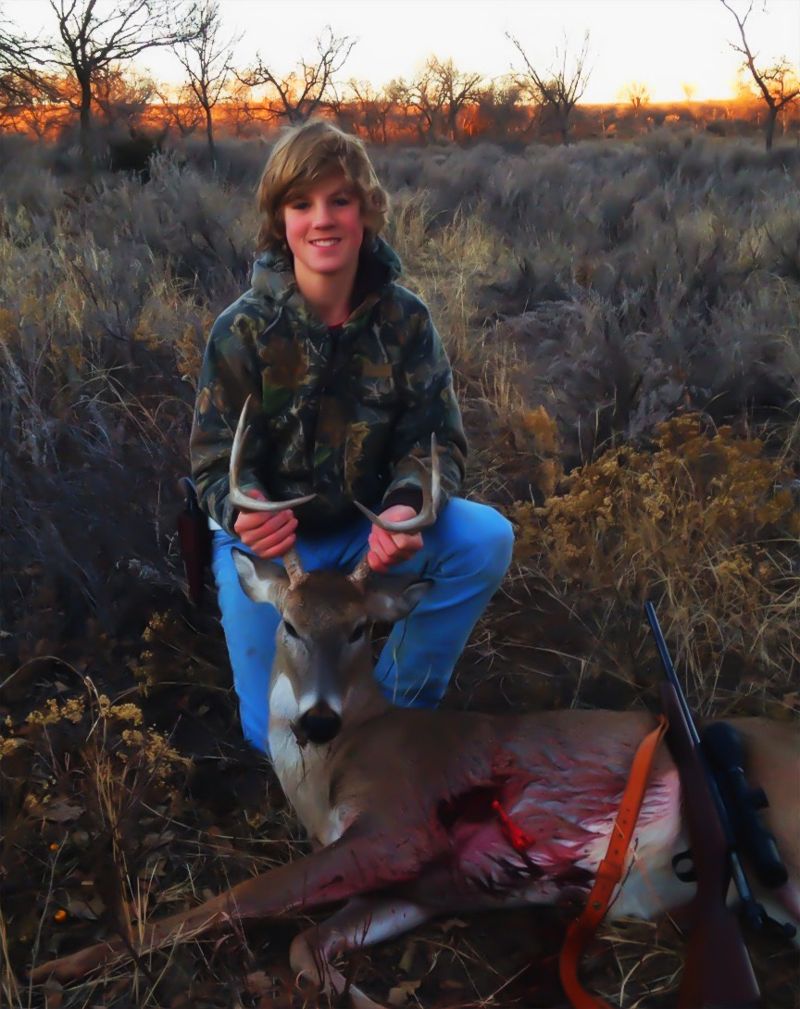
I took his picture with my phone. He posed the way he had probably posed a hundred times in his mind. Only this time it was real.
On the drive home we planned a stop at Syracuse Meats. I was selfishly weighing more Buck Stick Jerky against the jalapeño cheese links. Bobby had other things on his mind. He wanted a shoulder mount. I had been leaning toward a homemade European mount. Then Bobby reminded me of my first buck. A Bosque County basket buck that hangs on the wall of his room today. Shoulder mount and all.
It made me think. There is so much talk these days about the harvest, about the animal and the antlers, and too often it comes at the cost of the hunt itself. The real thing. The memory. That Wheeler County seven-point riding home in our truck was not the most impressive set of antlers ever taken. But I would not trade him or that day for anything in this world. Neither would Bobby.
All our time and hard work had paid off. In our family’s record book he is a trophy. A memory for a lifetime, for a father and a son.